How to Begin in Wildlife Photography: A Practical Guide
Over the years, I’ve received a large number of emails from students and aspiring photographers who are passionate about wildlife and keen to understand how to follow a similar path. I’m always grateful for those messages, and I genuinely enjoy encouraging people who care about the natural world. Many of the questions, however, are repeated, so I thought it would be useful to create a detailed reference that students can return to at any stage of their journey.
This isn’t a checklist or a shortcut to success. Wildlife photography doesn’t work like that. Instead, this blog is an honest reflection on how I approach my work, what I’ve learned through experience, and what I believe truly matters if you want to photograph wildlife ethically, responsibly, and at a high level over the long term.
How did my interest in wildlife photography begin.
My connection with wildlife began long before photography, but it was during a particularly stressful period in my life that it took on a much deeper meaning. Spending time in nature became a way of stepping back, creating space, and finding calm when things felt overwhelming. Watching wildlife, learning behaviour, and simply being present outdoors offered a sense of separation from that stress.
Photography followed naturally, becoming a way to record and share moments from the natural world that most people never witness. I’ve never been interested in just collecting images. Instead, my focus has always been on that connection with wildlife, understanding their behaviour, and using photography projects to raise awareness and appreciation for wildlife and the environments that support them.
How long does it take to reach a ‘high level’?
There’s no clear point where you suddenly arrive. What people often describe as a “high level” is usually the result of many years of consistent effort, early mornings, uncomfortable conditions, missed opportunities, and a long slow improvement.
Wildlife photography is not a fast discipline. Improvement happens quietly, with a lot of time invested in the field, and often only becomes obvious when you look back over several years of work.

Being out there in the field, rather than talent, is often what really drives progress.
First steps: building foundations rather than chasing results
The most important first step is learning to observe wildlife without the pressure of taking photographs. Understanding behaviour, seasons, light, habitats, and daily routines will do more for your photography than any piece of equipment.
Strong foundations are built through:
Spending time with local, familiar wildlife
Visiting the same locations repeatedly
Learning to recognise signs of stress or disturbance
Understanding when not to approach or take a photo
Reviewing your work honestly and learning constantly from your mistakes ( and there will be lots )
There’s no single route into wildlife photography. Curiosity, patience, and respect for your subject, matter far more than technical knowledge alone.

Fieldcraft: the cornerstone of ethical wildlife photography
Fieldcraft is one of the most important skills a wildlife photographer can develop, yet it’s often overlooked. It’s the ability to move, position yourself, and behave in a way that minimises disturbance and allows wildlife to act naturally.
The welfare of the subject must always come before any photograph. No image is worth stressing, disturbing, or endangering wildlife. If a bird changes its behaviour because of your presence — becomes alert, vocal, hesitant, or leaves the area — you’re already too close.
Good fieldcraft includes knowing when to back off, when to walk away entirely, and being comfortable with coming home without an image. Ethical decisions may mean fewer photos, but they will always lead to better work in the long run.
Understanding behaviour: the key to natural images
The most natural and intimate images are rarely accidental. They come from understanding behaviour well enough to anticipate what might happen next.
By learning patterns — feeding routines, flight paths, territorial behaviour, or breeding cycles — you can position yourself in advance and let the moment unfold naturally. This approach reduces disturbance and removes the need to react suddenly, which often leads to missed shots or stressed wildlife.
Many of my strongest images come from long periods of watching and waiting, doing very little, and allowing wildlife to dictate the pace.

Time: the most valuable investment you can make
One of the biggest misconceptions about wildlife photography is how long it takes to produce a strong image.
A single photograph might represent:
Dozens of visits to the same location
Weeks or months of learning behaviour
Long hours of waiting with no visible action
Many failed attempts before success
Some images happen unexpectedly, but most meaningful work comes from long-term commitment to a subject or place. Wildlife photography is slow by nature, and embracing that slowness is essential. There is a saying that “ You get out, what you put in “ and that’s very true when it comes to producing impactful images, with story and technical correctness.
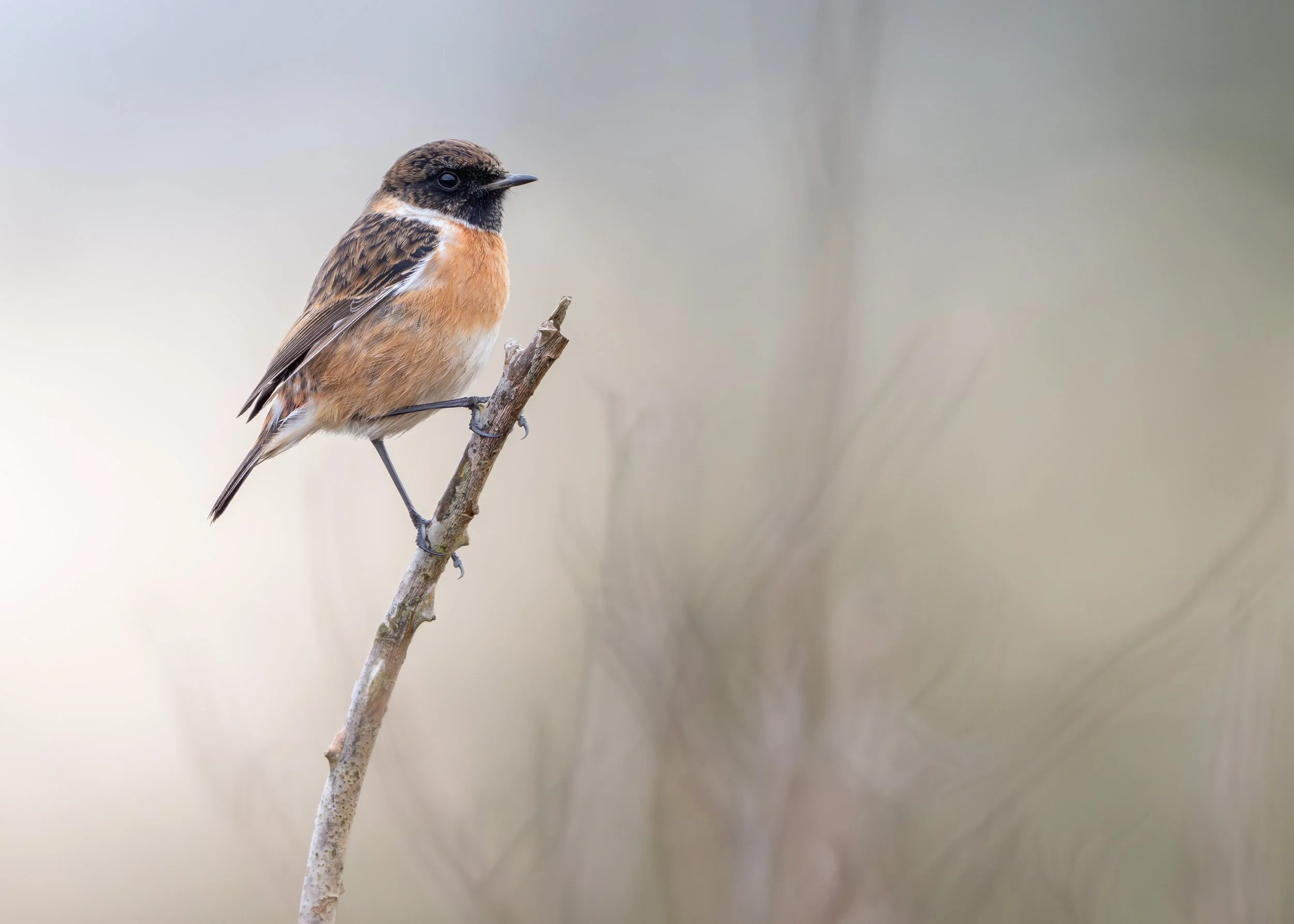
As an example, the image below of a little owl coming into land took over 3 months of patiently watching and observing its flight times, behaviours etc, before I even attempted a photo which was taken from a temporary hide.

Perspective and composition: working at the subject’s level
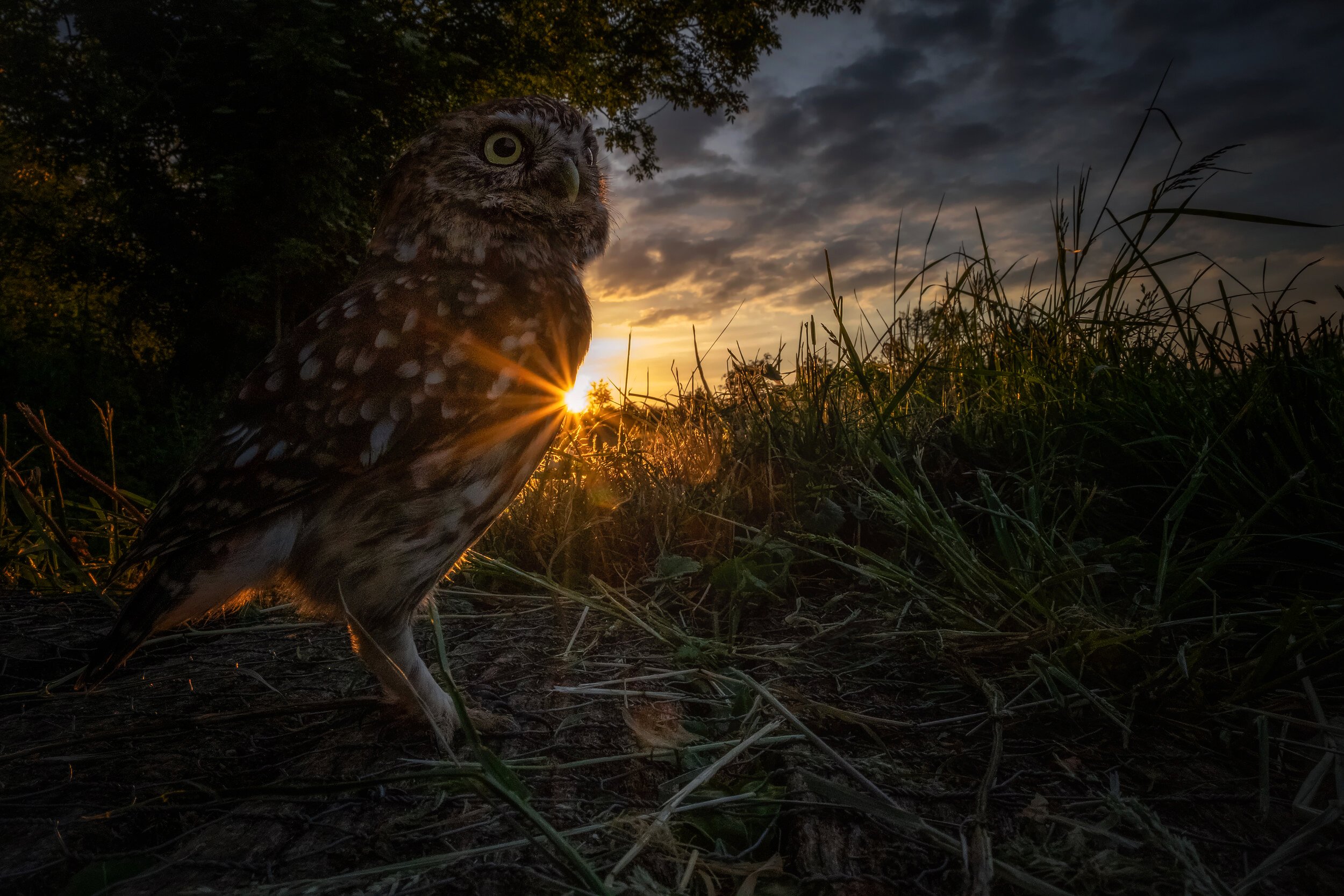
Whenever it’s safe and appropriate to do so, I try to work at eye level with my subject. Getting down low creates a much stronger sense of connection and intimacy.
Working at the subject’s level often:
Separates the subject more effectively from the background
Creates softer, cleaner backgrounds
Places the viewer within the scene rather than above it
This change in perspective can completely transform how an image feels, turning a record shot into something far more engaging and emotional.

Light, background, and simplicity
Great wildlife images are rarely just about the animal itself. Light, background, and simplicity play a huge role.
I’m always looking for clean backgrounds, soft light, and uncluttered scenes that allow the subject to stand out. This often means waiting for the right moment rather than taking the first available shot, this is something you will learn over time.
Understanding how light changes throughout the day — and how it interacts with your subject and background — is far more important than shooting constantly.
Equipment: useful, but never the priority
Equipment certainly has its place in wildlife photography, particularly when working in challenging conditions. Wildlife is often most active in low light — at dawn, dusk, or during poor weather — and having reliable camera bodies and high-quality lenses can make a real difference when it comes to image quality, autofocus performance, and low-light capability. Investing in the best glass you can realistically afford is beneficial, but it’s important to be honest about the cost. Good equipment is expensive, and it should be seen as a long-term investment rather than a shortcut to better images.
Just as important as the equipment itself is knowing it inside out. Wildlife moments are often fleeting, and conditions can change in seconds. Being completely familiar with your camera — from autofocus modes and exposure settings to how it handles in low light — allows you to react instinctively without hesitation. When you’re not thinking about buttons or menus, you’re free to concentrate on behaviour, light, and timing, which is where strong images are really made.
Remember, equipment alone does not make a photograph - the photographer does !!
I use modern Nikon camera bodies and lenses suited to wildlife, alongside remote camera systems for specific monitoring and conservation projects, but gear is never the starting point for me. Understanding behaviour, reading light, and applying good fieldcraft will always outweigh the benefits of the latest technology. Expensive equipment cannot compensate for poor positioning, rushed decisions, or a lack of understanding of your subject. A well-placed photographer using modest gear will consistently produce stronger, more meaningful images than someone relying on high-end equipment without patience or purpose.
As skills develop, better equipment can help you realise your vision more consistently — but it should support your photography, not define it. The most important piece of kit will always be the photographer behind the camera.

The role of patience
Wildlife photography teaches patience like very few other pursuits. There will be days where nothing happens, weather ruins plans, or wildlife simply doesn’t appear. Here in my part of the UK, the majority of my photography trips end in no usable image - that’s just the way it is. But when the stars align and all that works come together for that small moment in time, then there no better feeling. You can then look back and be proud of what you have achieved. That’s why we do this…
Learning to accept those days where nothing happens as part of the process is crucial. Some of my most valuable learning has happened on days when I came home without a single image, but I’ve understood the reasons why and formulated a new plan.
Wellbeing and the value of time spent in nature
An often overlooked aspect of wildlife photography is its impact on wellbeing. Spending long periods in nature — often quietly and alone — can be grounding, calming, and restorative.
Being outdoors provides perspective, reduces stress, and encourages mindfulness. Even sessions that produce no photographs can feel worthwhile if you allow yourself to simply enjoy being there. When I first started I was obsessed in getting a photo and got very demoralised when I didn’t. As I’ve got older, a far more enjoy just being out there and any photo is a bonus.
If you want a long-term relationship with wildlife photography, learning to value the experience as much as the outcome is essential.

Does Social Media play a part and is it competitive?
Wildlife photography can sometimes appear highly competitive, particularly online. Social media encourages constant comparison, where images are presented without context and success is often measured by likes, shares, or comments. What those platforms rarely show is the full story behind a photograph — the early starts, repeated visits, failed attempts, ethical decisions, and moments where the right choice was to walk away without taking a photo at all.
It’s easy to forget that every image has a backstory, and that backstory is almost never visible on social media. Comparing your work to others, without understanding the time, access, resources, or circumstances involved, can quickly become unhelpful and discouraging. Some images represent years of experience, long-term projects, or opportunities that simply aren’t available to everyone.
I believe it’s important to share your work if you enjoy doing so, but only if it remains positive for you. The real value lies in the process — the time spent outdoors, the learning, the quiet moments, and the satisfaction of creating something you’re proud of. If you’ve worked ethically, respected your subject, and enjoyed the experience, then the opinions of strangers online ultimately matter very little.
Social media can also be a toxic place at times. Criticism is often offered without understanding, and negativity can overshadow genuine effort and growth. Learning to detach your self-worth from online reactions is an important skill, especially if you want to stay motivated long term.
In reality, the biggest challenges in wildlife photography are rarely other photographers. They are time, access to wildlife, weather, light, and the unpredictable nature of wildlife itself. Staying patient, working ethically, and remaining motivated over the long term — regardless of online validation — is the real challenge, and ultimately the most rewarding part of the journey.
Final thoughts
If you’re passionate about wildlife photography, you’re already on the right path. That passion is what will carry you through the early mornings, the quiet days where nothing happens, and the moments of self-doubt along the way. Focus on observation, learning, and building a genuine respect for your subjects and the landscapes they depend on. Invest your time in understanding behaviour and fieldcraft, and allow your skills to develop naturally, without rushing the process or comparing your progress to others.
Wildlife photography rewards those who are willing to slow down, pay attention, and work with patience and care. When you consistently put the welfare of the subject above the image, something interesting happens — the work becomes more honest, more meaningful, and far more rewarding. If you stay curious, work ethically, and enjoy the process, the photographs will come in their own time, often quietly, and often when you least expect them.
If you’ve enjoyed this blog and found it helpful, please feel free to leave a comment. I’m always happy to help where I can and to answer questions about my work, so feel free to contact me through this website.