Another Year of SW Wildlife Monitoring – Promising Signs for the Season Ahead
As we begin another year of SW Wildlife Monitoring, it’s a good opportunity to reflect on how far the project has come and to share some very encouraging early signs from across the network of monitored nest boxes.
At its heart, SW Wildlife Monitoring is about providing safe, well-placed nest sites for owls and other birds of prey, learning more about their behaviour through careful, responsible monitoring, and using that knowledge to raise awareness and support long-term conservation. It’s a slow and patient process, but one that continues to prove its value year after year.
Barn owl eating what looks like a field mouse.
Defensive Posturing & Beak Clicking from this Barn Owl
Over recent weeks, activity has been building steadily across several sites. Many of the nest boxes are already being visited regularly, with Barn Owls and Tawny Owls both showing strong interest. Seeing birds returning, inspecting boxes and spending longer periods inside them is always reassuring and suggests that the habitat and locations are working as intended.
One of the most exciting developments so far this season has been the increased use of a kestrel box. Kestrels don’t always take to boxes immediately, so to see a pair actively using the site is particularly rewarding. Even more promising is the behaviour being observed, with the pair spending time together and clearly strengthening their bond. If all goes well, this could lead to a breeding attempt around April or May — something I’ll be watching closely, with fingers firmly crossed.
Male tawny owl calling in the female. Just listen to those calls.
Wonderful male kestrel displaying to his mate who flies into the box.
Early Breeding - a Critical Time for Tawny Owls
Tawny Owls deserve special attention at this time of year, as they are early breeders and can begin nesting as early as February / March. This makes the coming weeks especially important for them. Establishing territories, selecting suitable nest sites and laying early clutches all happen during this period, and any disturbance can have a significant impact.
With that in mind, it’s incredibly encouraging to see tawny owls already engaging with boxes and showing settled behaviour. After several challenging breeding seasons — including a very wet winter followed by extreme summer temperatures — these early signs offer a real sense of hope for the year ahead.
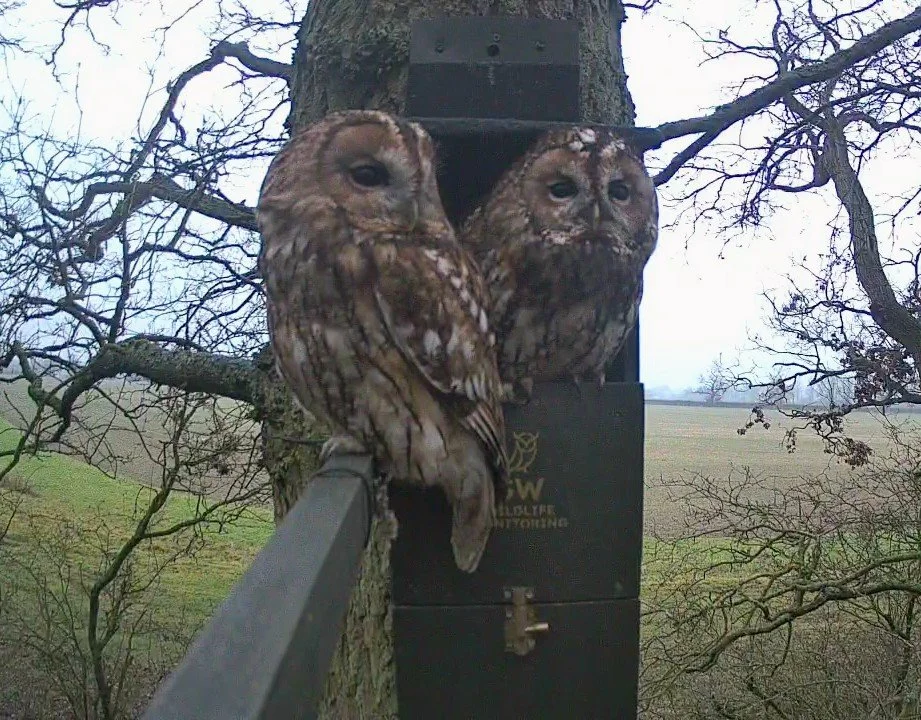
This pair didn’t breed in the box last year, so fingers crossed.
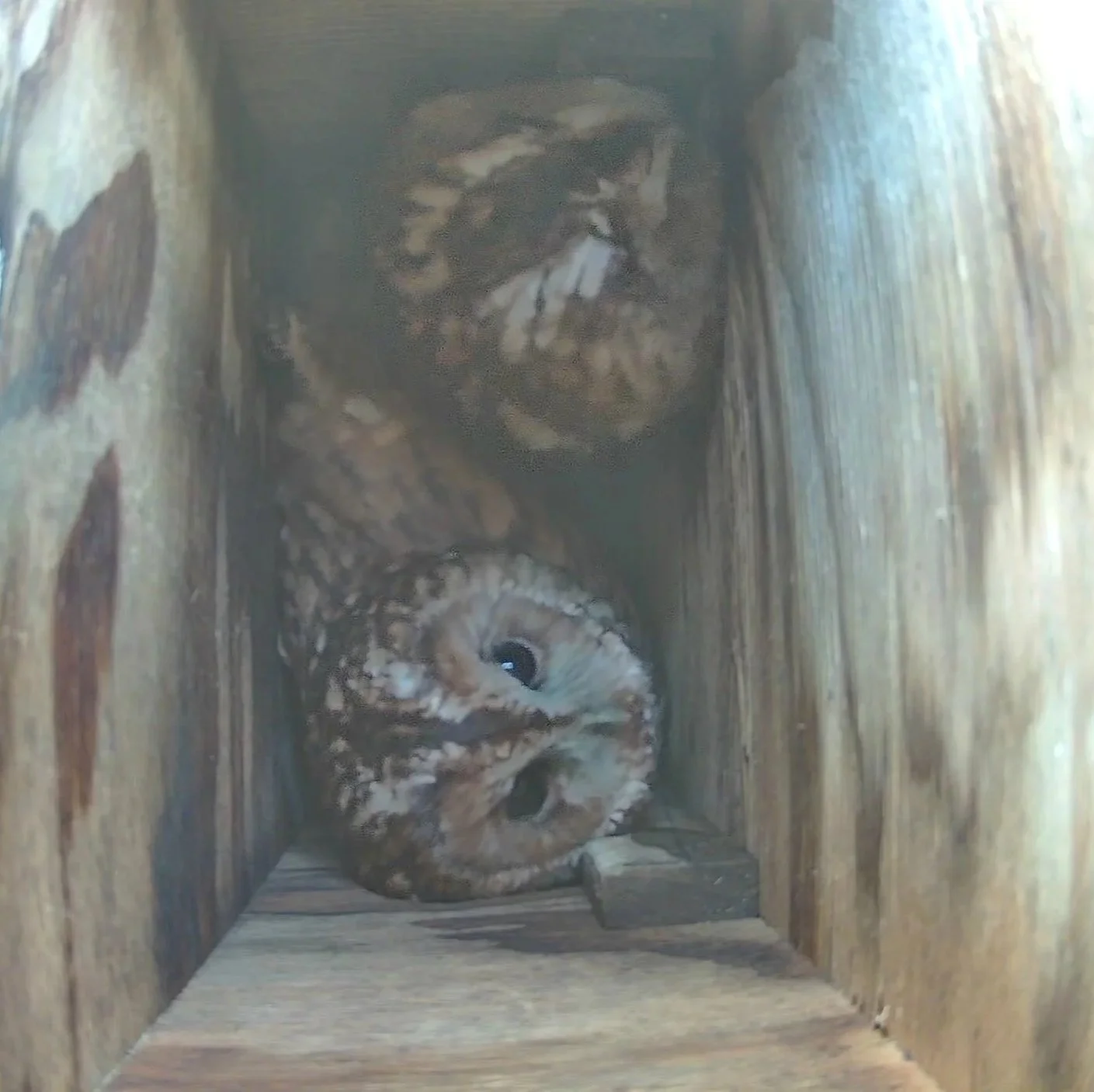
The cramped view from inside one of the boxes.
Looking Ahead with Cautious Optimism
As always with wildlife, nothing is guaranteed, and there is still a long way to go in the season. But right now, the signs are positive. Activity is increasing, birds are returning to known sites, and there’s a real sense of anticipation about what the next few months might bring.
Where breeding is successful, any chicks that are reared may also be ringed under the appropriate Schedule 1 licence, carried out in conjunction with a good friend, licence holder and trusted contact within the local ringing group / BTO. This work provides valuable data that contributes to a wider understanding of these species, and I’m hugely grateful for the expertise and ongoing support he and they provide.
None of this would be possible without the continued support of landowners and organisations who allow boxes to be installed and monitored, and who share the same commitment to protecting these species. Every successful breeding attempt, every returning bird, and every piece of insight gained helps to strengthen the case for providing and protecting these birds and suitable nest sites.
It’s an exciting time, and I’m looking forward to seeing how the season unfolds. With a bit of luck, patience and favourable conditions, the months ahead could bring successful breeding, valuable data, and more opportunities to share the hidden lives of these incredible birds.